
UX / Web Design · 2026
UW Survey
Research Division
Reframing a research division's website around how prospective clients evaluate services, credibility, and fit.
Research,
made
accessible.
The problem
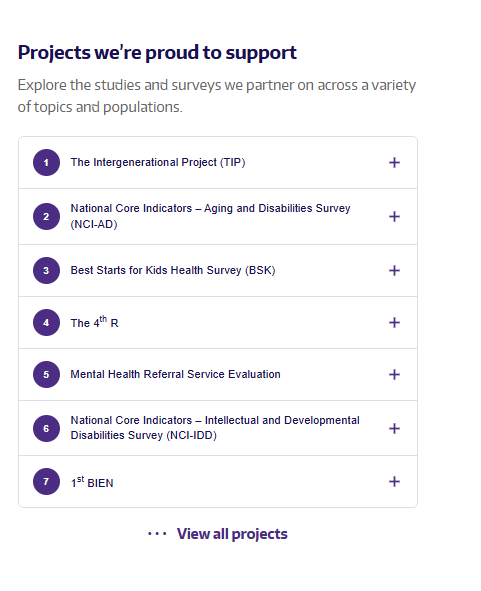
The website explained the organization before answering client questions.
SRD serves academic researchers, government agencies, hospitals, foundations, and nonprofits. The existing website contained valuable information, but services, partnerships, and project details were not organized around a clear client journey.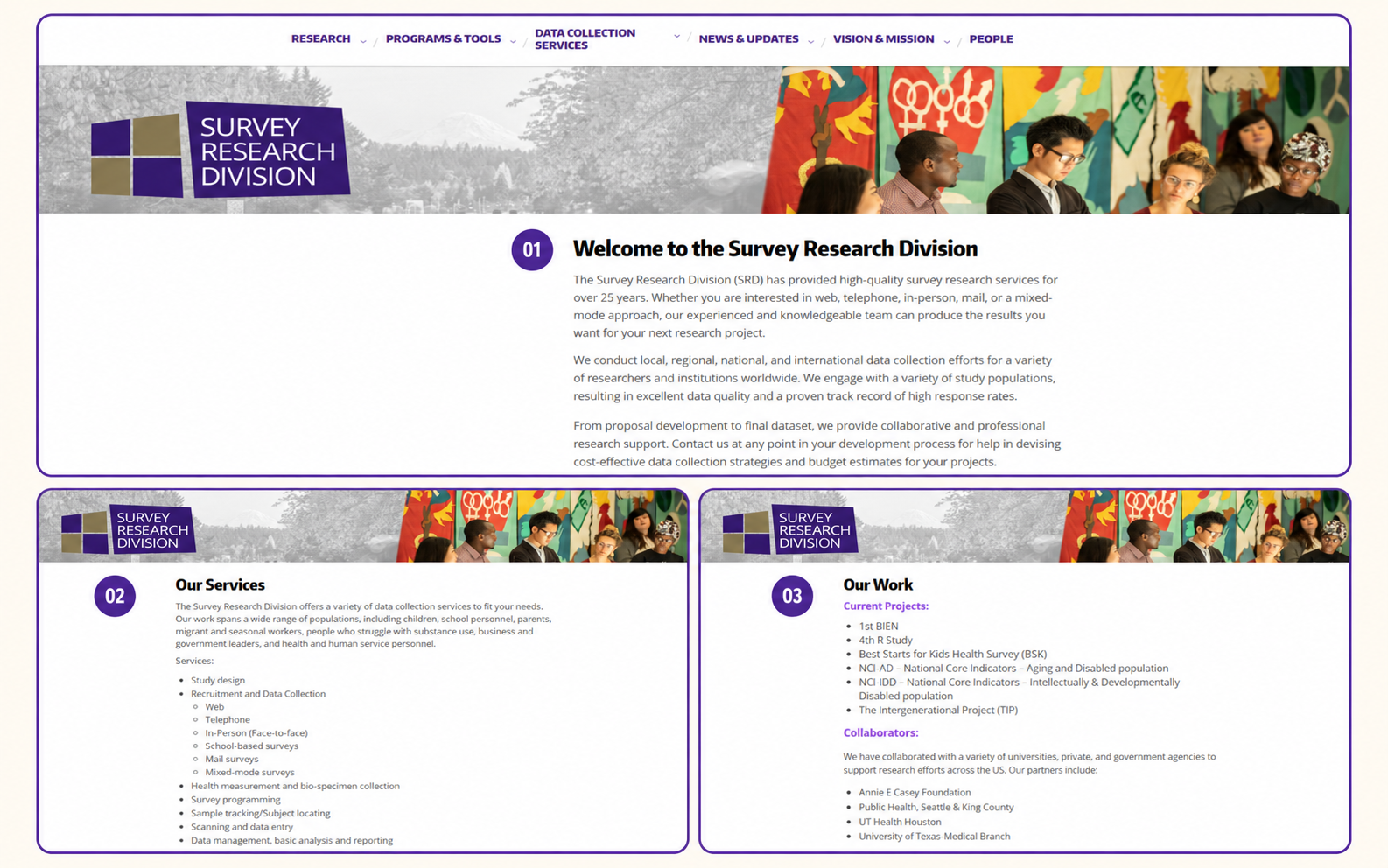
Content review revealed a mismatchSRD described itself. Prospective clients needed to evaluate fit.
Services were available, but hard to scan
Services appeared in long descriptions and lists, making SRD’s capabilities difficult to understand at a glance.
Projects and collaborators were presented at the same level
Relevant experience and institutional credibility were presented together, making their different roles difficult to distinguish.
Project names lacked context
Acronyms and titles appeared without the population, partner, or research method needed to assess relevance.
Reframe the site around client decisions
The new hierarchy follows the questions prospective clients need answered before starting a conversation with SRD.
01Understand
What does SRD do?
Identity and services
02Build confidence
Why should I choose SRD?
Capabilities and evidence
03Act
How do I get started?
Contact and request-a-quote CTA
Separate trust signals from relevant experience
Partners establish institutional trust. Projects demonstrate relevant research experience.
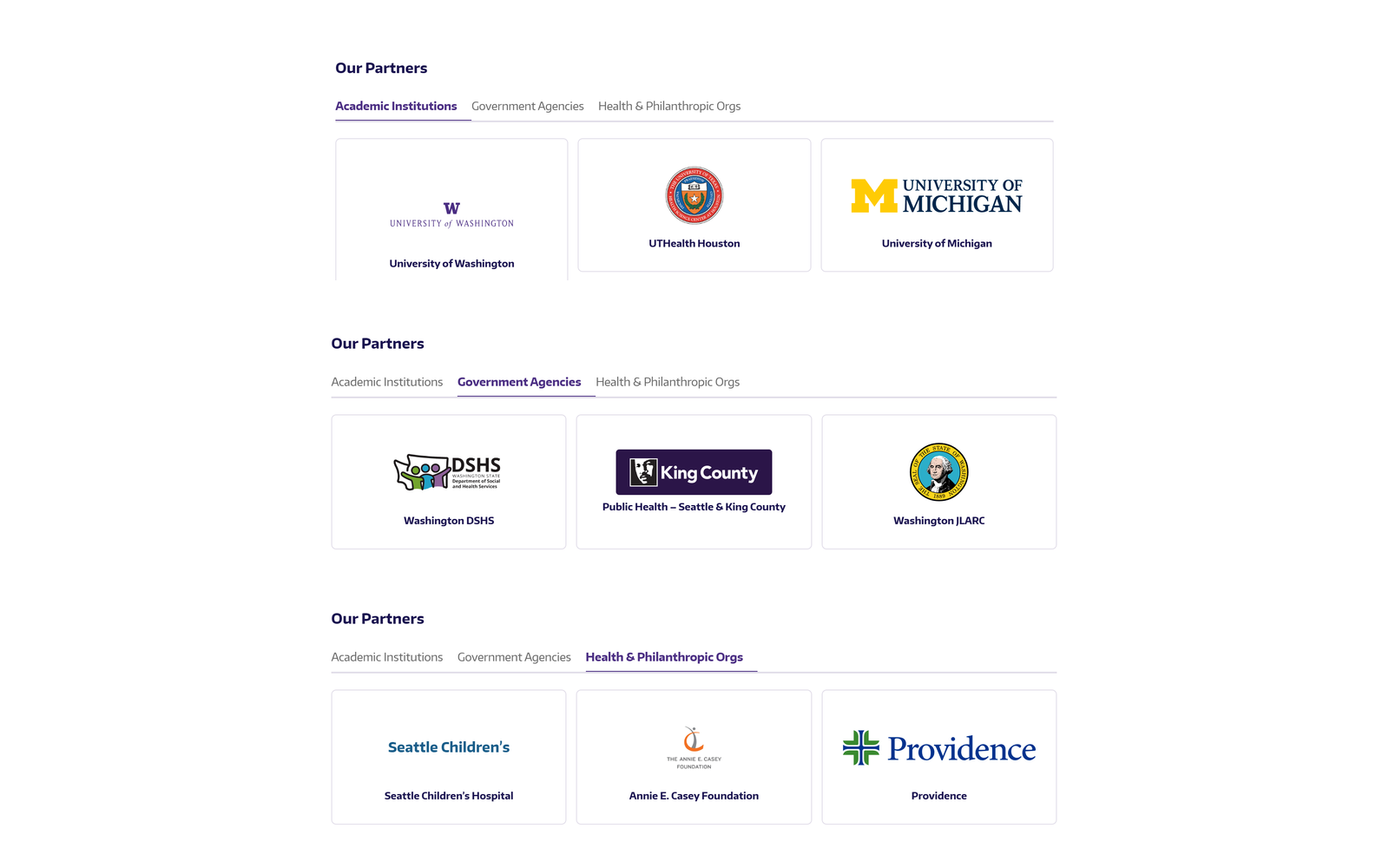
Partners answer
“Who has SRD worked with?”
Recognize trusted institutions
Categorized logos make SRD’s institutional relationships easy to recognize and scan.
Projects answer
“Has SRD done work like mine?”
Find comparable research
Structured project fields help visitors compare SRD’s past work with their own research needs.
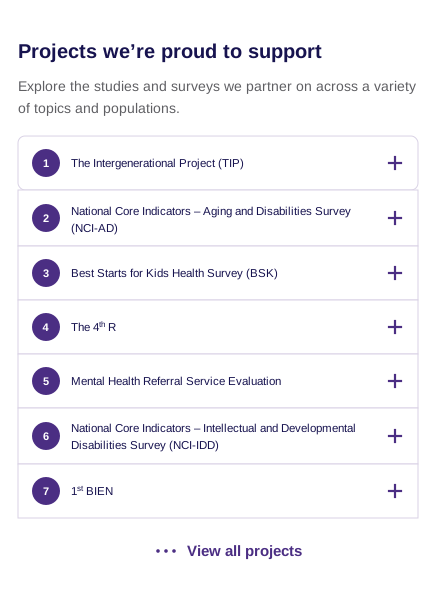
Reveal project details on demand
A collapsed project list supports quick scanning, while structured details remain available when a project feels relevant.
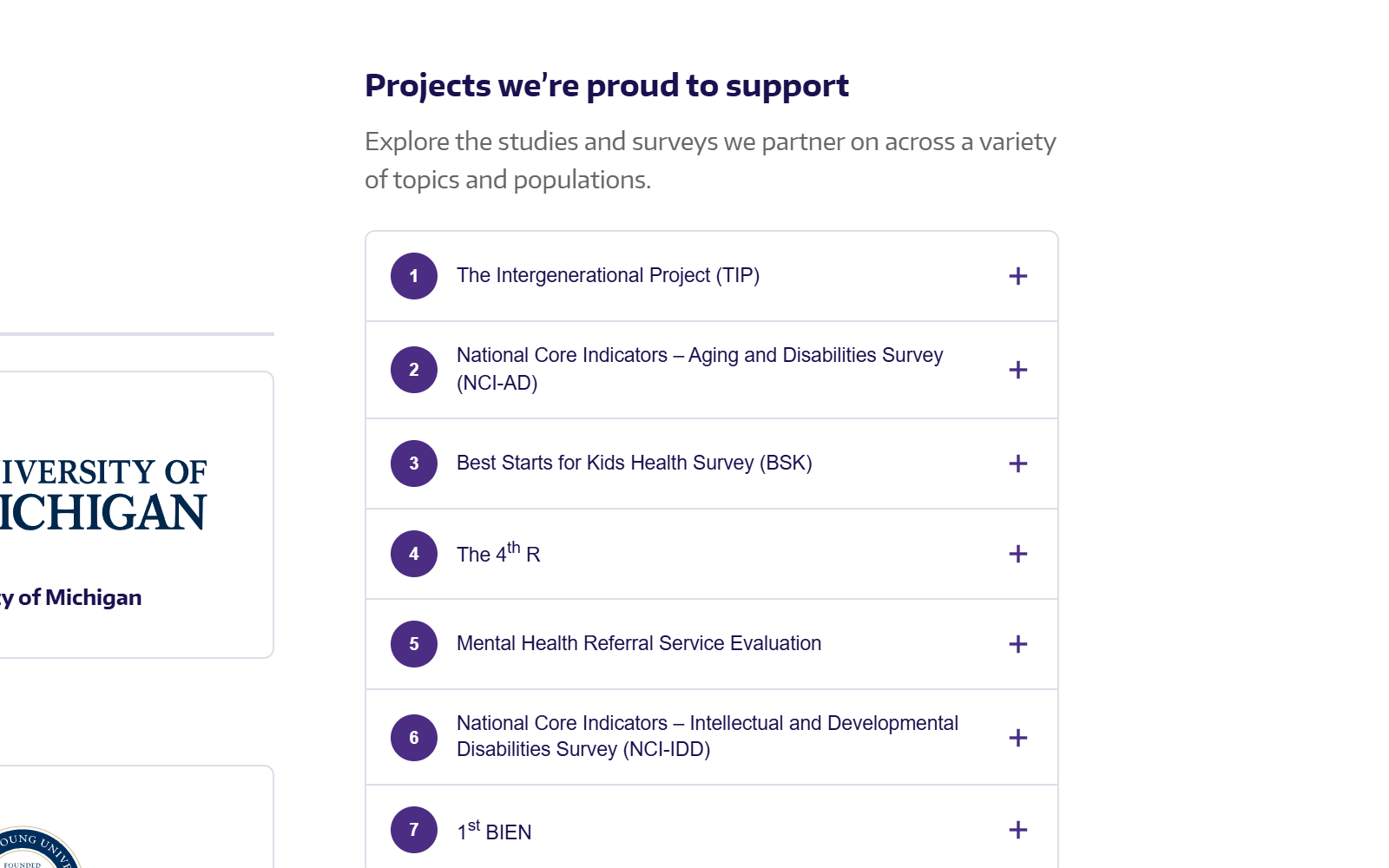
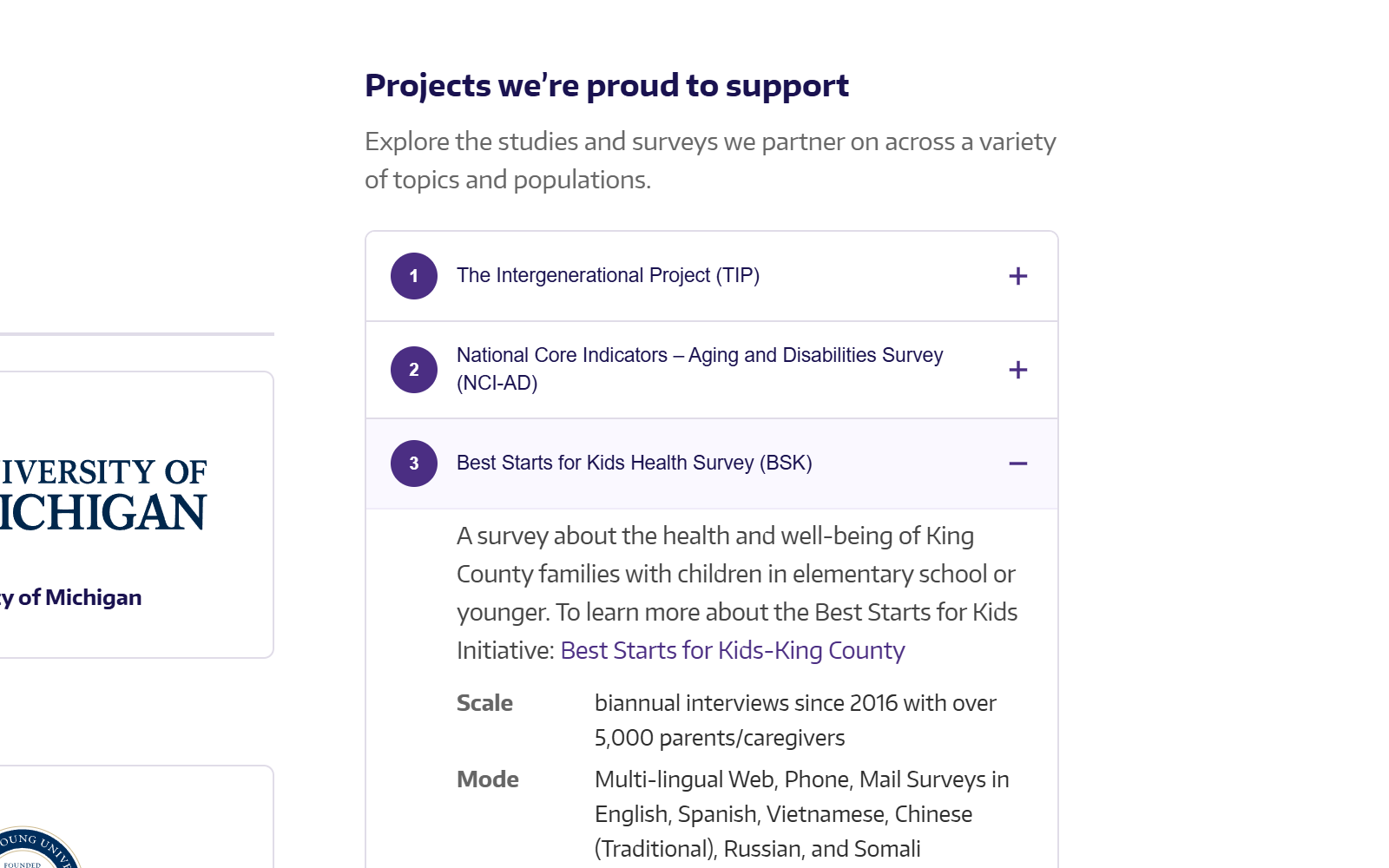
A ‘View all’ control keeps the initial list manageable while preserving access to the full project catalog.
Final experience
A clearer path from discovery to outreach
The final experience follows the questions prospective clients bring to the site.Discover capabilities
Understand what SRD offers and where it can help.
Evaluate fit
Use partners and projects to assess credibility and relevance.
Reach out
Move from evaluation to a clear next step.
Outcome
A client-centered information model, delivered for implementation
Organization-centered structure
→Client-centered information architecture
Unclear content roles
→Credibility and relevance separated
Dense information
→Progressive disclosure
Unclear path to outreach
→Discovery-to-contact pathway
Stakeholder-reviewed redesign
Reorganized service, partner, and project content
WordPress-ready implementation and handoff
Content, interaction, and asset QA
This project changed how I think about website redesigns. The hardest part was not creating new pages—it was deciding what each piece of content needed to help users understand, trust, or do.
Next, I would validate how quickly prospective clients can identify a relevant service or project and move toward contact.